Context
The operational gap
Residents often submit issues through phone calls, emails, forms, social messages, or informal channels. Staff then need to triage, assign, update, and report on the work without losing context.
A bilingual concept for resident issue reporting, photo intake, routing, status updates, staff queues, and accountability dashboards.
Residents often submit issues through phone calls, emails, forms, social messages, or informal channels. Staff then need to triage, assign, update, and report on the work without losing context.
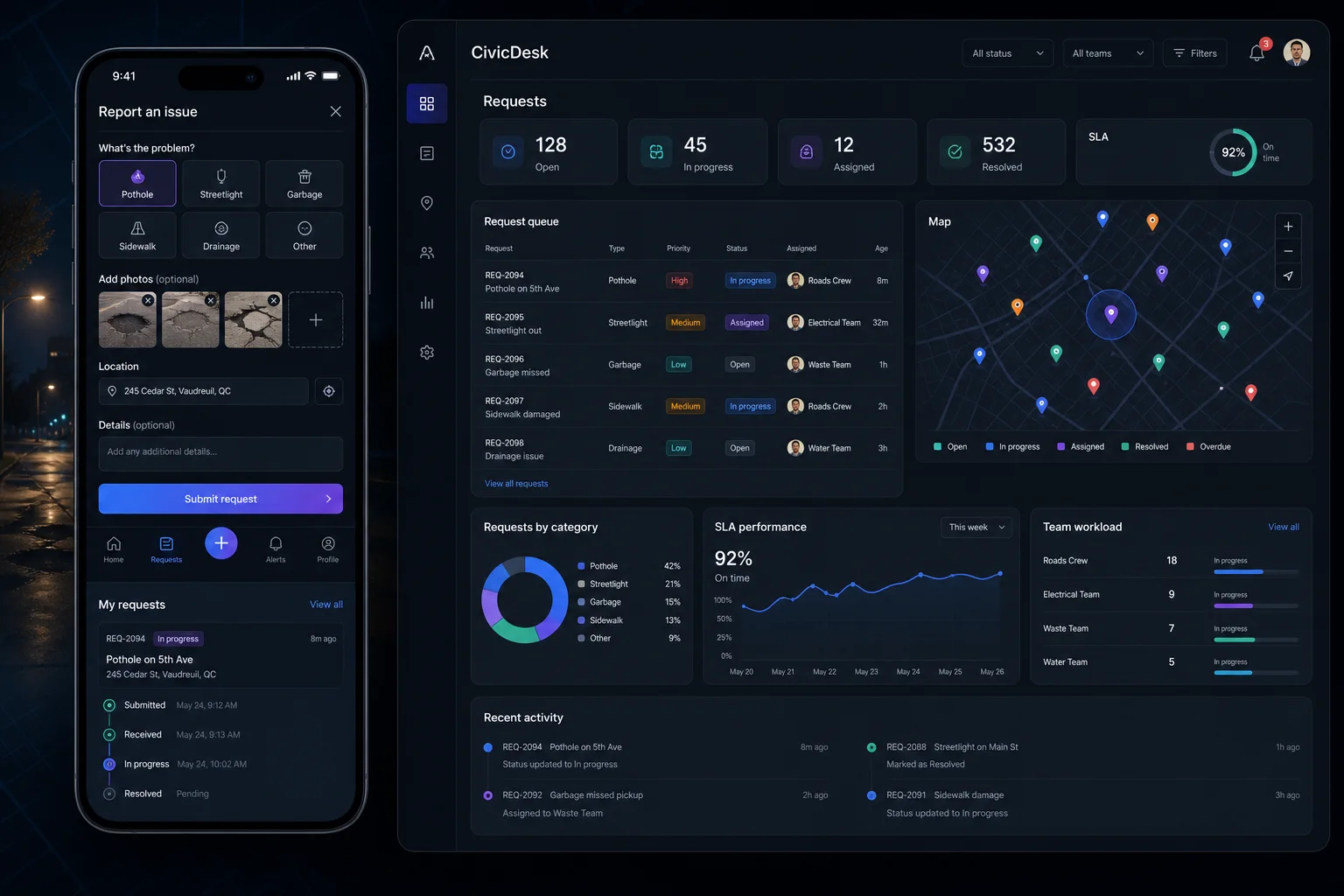
The concept shows a resident-facing request flow connected to an internal queue, map view, SLA status, photo evidence, and bilingual notifications.
Clearer resident expectations after a request is submitted
Less manual copying between inboxes, spreadsheets, and work queues
Better prioritization by location, issue type, and urgency
Cleaner reporting for service performance and recurring issues
The artifacts show how the request flow would be planned before implementation.
The status model that keeps residents and staff aligned from intake to closure.
Queue views for new, overdue, assigned, duplicate, and closed requests.
Permissions for residents, intake staff, supervisors, field crews, and administrators.
Define request categories, routing rules, owners, and expected communication points.
Build the request form, internal queue, status updates, and dashboard shell.
Run with selected issue types such as potholes, signage, waste, or public works.
Add integrations, reporting exports, notifications, and staff training material.
We can adapt this concept to a real context, with scope, risks, data, and delivery steps made clear.